Buy developpement.eu ?
We are moving the project
developpement.eu .
Are you interested in purchasing the domain
developpement.eu ?
domain@kv-gmbh.de · 0541-91531010
Buy developpement.eu ?
'Genitive or accusative?'
The genitive case is used to show possession or relationship between nouns, while the accusative case is used to show the direct object of a verb. In general, the genitive case is used to indicate ownership or association, while the accusative case is used to indicate the direct object of a verb or the object of a preposition. The choice between genitive and accusative depends on the specific context and the grammatical rules of the language being used. **
Genitive or accusative?
The genitive case is used to show possession or relationship between nouns, while the accusative case is used to show the direct object of a verb or the object of certain prepositions. In general, the genitive case is used to indicate possession or belonging, while the accusative case is used to indicate the direct object of a verb or the object of a preposition. The choice between genitive and accusative depends on the specific context and the grammatical rules of the language being used. **


Similar search terms for Accusative
Top-Angebote
Products related to Accusative:
-
Flythe Consulting Arika Wall Sconce Pair, Pair, Satin NickelThe Arika Wall Sconce Pair is an adaptation of old-fashioned light fixtures, with an appealing design that will complement modern decor. The lacquered solid brass sconces have 4.75 dia.x7 H clear glass hurricanes that will protect your standard...179,00 $*Shipping: 22,95 $Secure redirect to the provider
-
Profile Books Stillness Is The Key: An Ancient Strategy For Modern Life by Ryan Holiday - Hardback - Stoic Self-Help Book for Focus, Calm & Personal GrowthDiscover the timeless wisdom of Stillness Is the Key, a hardback guide to finding calm, clarity, and purpose in a busy world. Drawing on Stoic philosophy, Buddhist teaching, and stories from history's greatest leaders, thinkers, and athletes, Ryan Holiday argues that stillness is a discipline anyone can master. This book is a practical manual for living a calmer, sharper life, and is the final installment in Holiday's bestselling trilogy, alongside The Obstacle Is the Way and Ego Is the Enemy. Through three parts covering the mind, spirit, and body, Holiday explores how history's greatest figures cultivated inner stillness to achieve outer success, weaving together philosophy, biography, and psychology to reveal the secrets of the most successful and fulfilled individuals.8,99 £*Shipping: 2,99 £Secure redirect to the provider
-
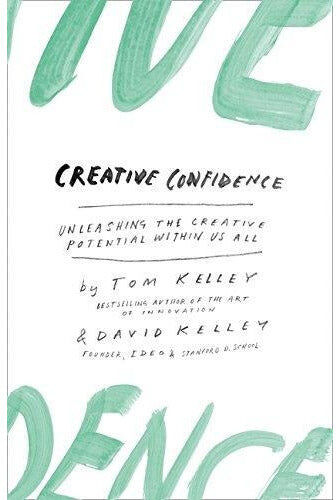
HARPERCOLLINS Creative Confidence by Tom & David Kelley – Unleashing Your Creative Potential & Innovation MindsetA powerful and inspiring book from the founders of IDEO, the award-winning design firm, on unleashing the creativity that lies within each and every one of us. Too often, companies and individuals assume that creativity and innovation are the domain of the ‘creative types’. But two of the foremost experts in innovation, design and creativity on the planet show us that each and every one of us is creative. In an entertaining and inspiring narrative that draws on countless stories from their work at IDEO, and with many of the world's top companies and design firms, David and Tom Kelley identify the principles and strategies that will allow us to tap into our creative potential in our work lives, and in our personal lives, allow us to think outside the box in terms of how we approach and solve problems. ‘Creative Confidence’ is a book that will help each of us be more productive and successful in our lives and in our careers.4,95 £*Shipping: 1,99 £Secure redirect to the provider
-
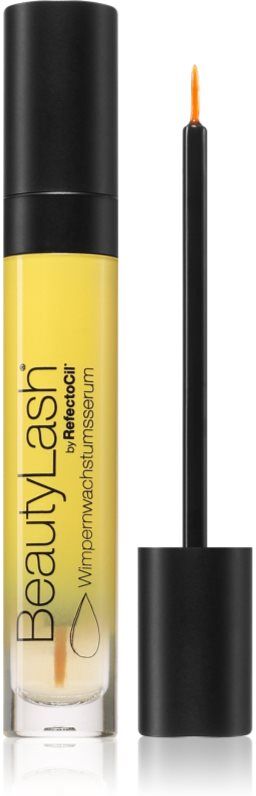
RefectoCil BeautyLash Lash Growth Serum growth serum for lashes 4 mlRefectoCil BeautyLash Lash Growth Serum, 4 ml, Eyelash Care and Styling for Women, Has nature not bestowed eyelashes on you that are as distinctive as you’d like? The RefectoCil BeautyLash Lash Growth Serum serum boosts their growth, strengthening them from the roots to get length and volume. The result is not just longer but also nourished and healthier-looking eyelashes which are less prone to falling out. They emphasise your look and accentuate the beauty of your eyes. Characteristics: supports and accelerates lash growth quick and easy application from the comfort of your home strengthens and nourishes lashes Ingredients: vegan product How to use: Use every morning and evening.19,98 £*Shipping: 3,99 £Secure redirect to the provider


-
Dative or accusative?
Dative and accusative are two different cases in grammar that indicate the relationship between a verb and its object. The dative case is used to show the indirect object of a verb, while the accusative case is used to show the direct object. To determine whether to use dative or accusative, you need to consider the verb in the sentence and identify whether the object is receiving the action directly (accusative) or indirectly (dative). **
-
Whom or what accusative?
The accusative case is used to indicate the direct object of a verb in a sentence. It answers the question "whom" or "what" is receiving the action of the verb. In English, the accusative case is often marked by word order or prepositions, while in some languages, such as Latin or German, it is marked by changes in the form of the noun or pronoun. **
-
Tolerate dative or accusative?
Whether to use the dative or accusative case in German depends on the verb being used and the prepositions that accompany it. Some verbs require the dative case, such as helfen (to help) or danken (to thank), while others require the accusative case, such as sehen (to see) or essen (to eat). It is important to learn which case each verb requires in order to use the correct form in a sentence. **
-
What is a subject accusative?
A subject accusative is a linguistic phenomenon where the direct object of a verb is marked with the accusative case, typically in languages that have a nominative-accusative alignment. This can occur in languages like Latin or Greek, where the accusative case is used to mark the direct object of a transitive verb. In these cases, the subject of the sentence is in the nominative case, while the direct object takes the accusative case. **


Nominative or accusative in Latin?
In Latin, the nominative case is used for the subject of a sentence, while the accusative case is used for the direct object. The nominative case is also used for predicate nominatives, which rename the subject. The accusative case is used for nouns that receive the action of the verb. **
What is the difference between accusative and accusative object, and dative and dative object?
The accusative case is used to indicate the direct object of a verb, while the accusative object is the noun or pronoun that receives the action of the verb. For example, in the sentence "I see the dog," "the dog" is in the accusative case and is the accusative object. Similarly, the dative case is used to indicate the indirect object of a verb, while the dative object is the noun or pronoun that receives the action indirectly. For example, in the sentence "I give the book to her," "her" is in the dative case and is the dative object. **
Top-Angebote
Products related to Accusative:
-
Tenpenny Parks Innovation Expansion by Thunderworks Games - Strategic Park ManagementTake your Tenpenny Parks experience further with the Innovation expansion from Thunderworks Games. Develop new ideas for your park, recruit additional specialists, and introduce exciting novelties that can change the way you plan and build. This expansion adds fresh strategic options to the park-management gameplay of Tenpenny Parks. Use research to improve your development plans, bring new specialists into your team, and create more distinctive attractions as you compete to shape a successful park. What’s included: Key features: - New innovation-focused content for Tenpenny Parks - Additional specialists to support your plans - New research and novelty options - More strategic choices during development Please note: This is an expansion and requires the Tenpenny Parks base game to play. It is suitable for players who want to add variety and further strategic depth to their existing game.35,98 £*Shipping: 3,95 £Secure redirect to the provider
-
Flythe Consulting Arika Wall Sconce Pair, Pair, Satin NickelThe Arika Wall Sconce Pair is an adaptation of old-fashioned light fixtures, with an appealing design that will complement modern decor. The lacquered solid brass sconces have 4.75 dia.x7 H clear glass hurricanes that will protect your standard...179,00 $*Shipping: 22,95 $Secure redirect to the provider
-
Profile Books Stillness Is The Key: An Ancient Strategy For Modern Life by Ryan Holiday - Hardback - Stoic Self-Help Book for Focus, Calm & Personal GrowthDiscover the timeless wisdom of Stillness Is the Key, a hardback guide to finding calm, clarity, and purpose in a busy world. Drawing on Stoic philosophy, Buddhist teaching, and stories from history's greatest leaders, thinkers, and athletes, Ryan Holiday argues that stillness is a discipline anyone can master. This book is a practical manual for living a calmer, sharper life, and is the final installment in Holiday's bestselling trilogy, alongside The Obstacle Is the Way and Ego Is the Enemy. Through three parts covering the mind, spirit, and body, Holiday explores how history's greatest figures cultivated inner stillness to achieve outer success, weaving together philosophy, biography, and psychology to reveal the secrets of the most successful and fulfilled individuals.8,99 £*Shipping: 2,99 £Secure redirect to the provider
-
'Genitive or accusative?'
The genitive case is used to show possession or relationship between nouns, while the accusative case is used to show the direct object of a verb. In general, the genitive case is used to indicate ownership or association, while the accusative case is used to indicate the direct object of a verb or the object of a preposition. The choice between genitive and accusative depends on the specific context and the grammatical rules of the language being used. **
-
Genitive or accusative?
The genitive case is used to show possession or relationship between nouns, while the accusative case is used to show the direct object of a verb or the object of certain prepositions. In general, the genitive case is used to indicate possession or belonging, while the accusative case is used to indicate the direct object of a verb or the object of a preposition. The choice between genitive and accusative depends on the specific context and the grammatical rules of the language being used. **
-
Dative or accusative?
Dative and accusative are two different cases in grammar that indicate the relationship between a verb and its object. The dative case is used to show the indirect object of a verb, while the accusative case is used to show the direct object. To determine whether to use dative or accusative, you need to consider the verb in the sentence and identify whether the object is receiving the action directly (accusative) or indirectly (dative). **
-
Whom or what accusative?
The accusative case is used to indicate the direct object of a verb in a sentence. It answers the question "whom" or "what" is receiving the action of the verb. In English, the accusative case is often marked by word order or prepositions, while in some languages, such as Latin or German, it is marked by changes in the form of the noun or pronoun. **
Similar search terms for Accusative
-
HARPERCOLLINS Creative Confidence by Tom & David Kelley – Unleashing Your Creative Potential & Innovation MindsetA powerful and inspiring book from the founders of IDEO, the award-winning design firm, on unleashing the creativity that lies within each and every one of us. Too often, companies and individuals assume that creativity and innovation are the domain of the ‘creative types’. But two of the foremost experts in innovation, design and creativity on the planet show us that each and every one of us is creative. In an entertaining and inspiring narrative that draws on countless stories from their work at IDEO, and with many of the world's top companies and design firms, David and Tom Kelley identify the principles and strategies that will allow us to tap into our creative potential in our work lives, and in our personal lives, allow us to think outside the box in terms of how we approach and solve problems. ‘Creative Confidence’ is a book that will help each of us be more productive and successful in our lives and in our careers.4,95 £*Shipping: 1,99 £Secure redirect to the provider
-
RefectoCil BeautyLash Lash Growth Serum growth serum for lashes 4 mlRefectoCil BeautyLash Lash Growth Serum, 4 ml, Eyelash Care and Styling for Women, Has nature not bestowed eyelashes on you that are as distinctive as you’d like? The RefectoCil BeautyLash Lash Growth Serum serum boosts their growth, strengthening them from the roots to get length and volume. The result is not just longer but also nourished and healthier-looking eyelashes which are less prone to falling out. They emphasise your look and accentuate the beauty of your eyes. Characteristics: supports and accelerates lash growth quick and easy application from the comfort of your home strengthens and nourishes lashes Ingredients: vegan product How to use: Use every morning and evening.19,98 £*Shipping: 3,99 £Secure redirect to the provider
-
Flythe Consulting Jonetia Hurricane Wall Sconce Pair Satin Brass, Pair, Satin BrassThe Jonetia Satin Brass Hurricane Wall Sconce Pair proudly displays grandeur on your walls. These hand-forged, solid brass sconces feature a diamond design and fleur-de-lis motif. Sconces have a lacquered, satin brass finish that is done by hand. A...229,00 $*Shipping: 32,06 $Secure redirect to the provider
-
Space Cowboys Sherlock Holmes: Consulting Detective – Carlton House & Queen’s Park, 10 CasesStep into Victorian London and investigate a new collection of challenging cases in this standalone edition of Sherlock Holmes: Consulting Detective. As a team of investigators, examine clues, follow leads, and question your powers of deduction as you work to solve each mystery. This edition includes 10 cases with varying levels of difficulty, offering an engaging experience for players who enjoy detailed investigations, logical reasoning, and collaborative problem-solving. Each case invites you to study the evidence carefully and decide which trail to follow while avoiding distractions and misleading information. Designed for group play, the game provides an immersive tabletop experience for fans of Sherlock Holmes and mystery games. Carlton House & Queen’s Park is a standalone installment in the Consulting Detective range and can be enjoyed as its own collection of investigations.26,45 £*Shipping: 3,95 £Secure redirect to the provider
-
Tolerate dative or accusative?
Whether to use the dative or accusative case in German depends on the verb being used and the prepositions that accompany it. Some verbs require the dative case, such as helfen (to help) or danken (to thank), while others require the accusative case, such as sehen (to see) or essen (to eat). It is important to learn which case each verb requires in order to use the correct form in a sentence. **
-
What is a subject accusative?
A subject accusative is a linguistic phenomenon where the direct object of a verb is marked with the accusative case, typically in languages that have a nominative-accusative alignment. This can occur in languages like Latin or Greek, where the accusative case is used to mark the direct object of a transitive verb. In these cases, the subject of the sentence is in the nominative case, while the direct object takes the accusative case. **
-
Nominative or accusative in Latin?
In Latin, the nominative case is used for the subject of a sentence, while the accusative case is used for the direct object. The nominative case is also used for predicate nominatives, which rename the subject. The accusative case is used for nouns that receive the action of the verb. **
-
What is the difference between accusative and accusative object, and dative and dative object?
The accusative case is used to indicate the direct object of a verb, while the accusative object is the noun or pronoun that receives the action of the verb. For example, in the sentence "I see the dog," "the dog" is in the accusative case and is the accusative object. Similarly, the dative case is used to indicate the indirect object of a verb, while the dative object is the noun or pronoun that receives the action indirectly. For example, in the sentence "I give the book to her," "her" is in the dative case and is the dative object. **
* All prices are inclusive of VAT and, if applicable, plus shipping costs. The offer information is based on the details provided by the respective shop and is updated through automated processes. Real-time updates do not occur, so deviations can occur in individual cases. ** Note: Parts of this content were created by AI.