Buy developpement.eu ?
We are moving the project
developpement.eu .
Are you interested in purchasing the domain
developpement.eu ?
domain@kv-gmbh.de · 0541-91531010
Buy developpement.eu ?
What is Dutch vocal polyphony?
Dutch vocal polyphony is a style of music that emerged in the Netherlands during the Renaissance period. It is characterized by the use of multiple independent vocal lines, each with its own melody, rhythm, and text, creating rich harmonies and intricate textures. Dutch composers such as Jan Pieterszoon Sweelinck were known for their contributions to this genre, which was popular in both sacred and secular settings. The use of vocal polyphony allowed for a high level of expressiveness and complexity in the music, making it a significant part of the Dutch musical tradition. **
Can someone explain polyphony to me?
Polyphony is a musical texture that features two or more independent melodic lines played or sung simultaneously. Each line has its own rhythm and contour, and they interact with each other to create a rich and complex sound. Polyphony is often associated with Renaissance and Baroque music, and it requires a high level of skill and coordination from the performers to maintain the independence of the different voices. This texture contrasts with homophony, where all voices move together in harmony, and monophony, where there is only one melodic line. **


Similar search terms for Polyphony
Top-Angebote
Products related to Polyphony:
-
Flythe Consulting Arika Wall Sconce Pair, Pair, Satin NickelThe Arika Wall Sconce Pair is an adaptation of old-fashioned light fixtures, with an appealing design that will complement modern decor. The lacquered solid brass sconces have 4.75 dia.x7 H clear glass hurricanes that will protect your standard...179,00 $*Shipping: 22,95 $Secure redirect to the provider
-
HARPERCOLLINS Creative Confidence by Tom & David Kelley – Unleashing Your Creative Potential & Innovation MindsetA powerful and inspiring book from the founders of IDEO, the award-winning design firm, on unleashing the creativity that lies within each and every one of us. Too often, companies and individuals assume that creativity and innovation are the domain of the ‘creative types’. But two of the foremost experts in innovation, design and creativity on the planet show us that each and every one of us is creative. In an entertaining and inspiring narrative that draws on countless stories from their work at IDEO, and with many of the world's top companies and design firms, David and Tom Kelley identify the principles and strategies that will allow us to tap into our creative potential in our work lives, and in our personal lives, allow us to think outside the box in terms of how we approach and solve problems. ‘Creative Confidence’ is a book that will help each of us be more productive and successful in our lives and in our careers.4,95 £*Shipping: 1,99 £Secure redirect to the provider
-
EmperorS4 Hanamikoji Compact Strategy Card Game for Two Players - Strategy GameA compact strategy card game set in Kyoto's Hanamikoji Street. Players compete to earn geisha favor by managing hand and making timed decisions. Designed for two players, suitable for ages 10 and up.13,59 £*Shipping: 3,95 £Secure redirect to the provider
-
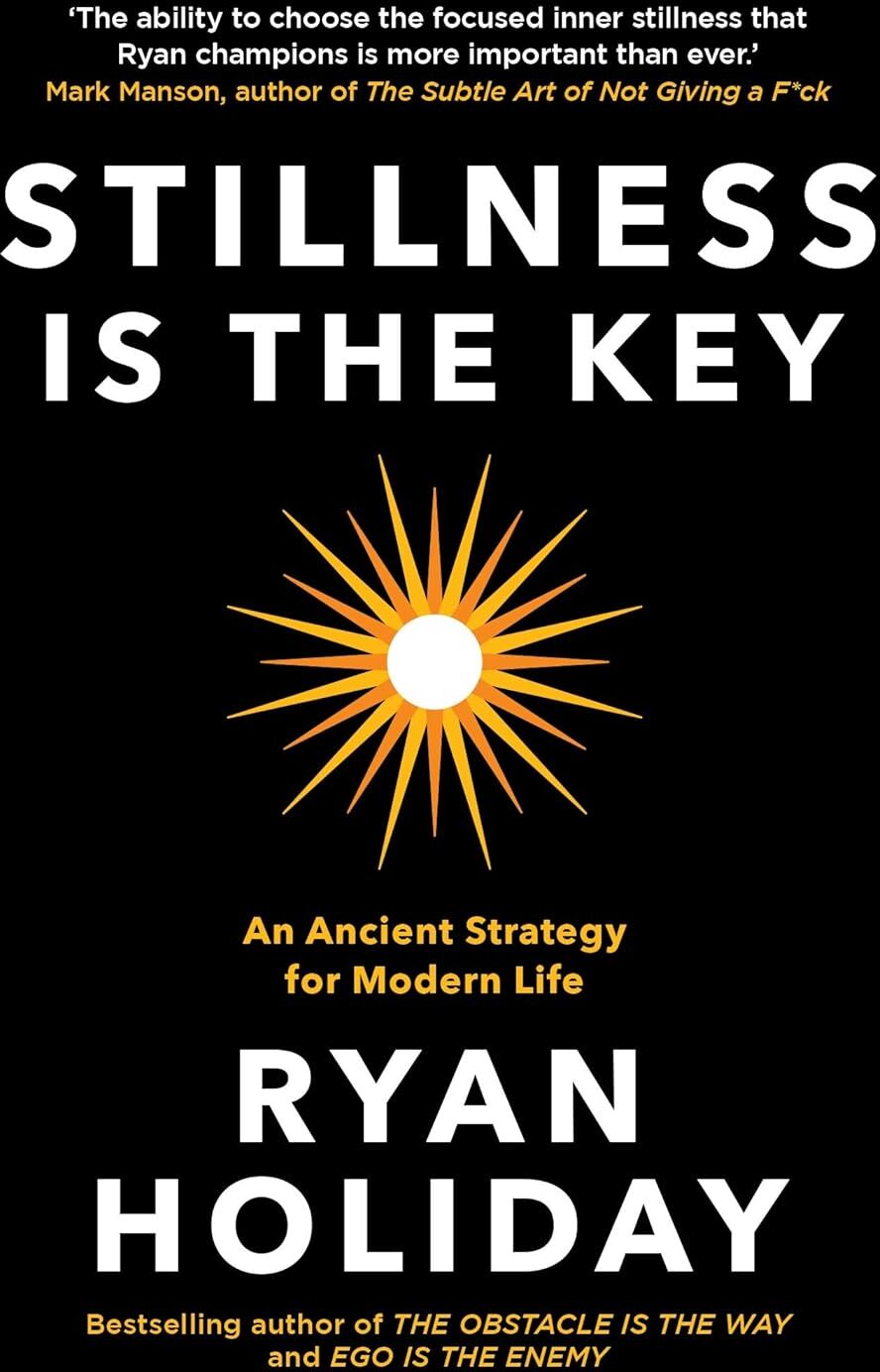
Profile Books Stillness Is The Key: An Ancient Strategy For Modern Life by Ryan Holiday - Hardback - Stoic Self-Help Book for Focus, Calm & Personal GrowthDiscover the timeless wisdom of Stillness Is the Key, a hardback guide to finding calm, clarity, and purpose in a busy world. Drawing on Stoic philosophy, Buddhist teaching, and stories from history's greatest leaders, thinkers, and athletes, Ryan Holiday argues that stillness is a discipline anyone can master. This book is a practical manual for living a calmer, sharper life, and is the final installment in Holiday's bestselling trilogy, alongside The Obstacle Is the Way and Ego Is the Enemy. Through three parts covering the mind, spirit, and body, Holiday explores how history's greatest figures cultivated inner stillness to achieve outer success, weaving together philosophy, biography, and psychology to reveal the secrets of the most successful and fulfilled individuals.8,99 £*Shipping: 2,99 £Secure redirect to the provider



-
Can you explain the history of early polyphony?
Early polyphony emerged in Western music during the medieval period, around the 9th century. It involved the simultaneous singing of two or more independent melodic lines. Initially, early polyphony was primarily found in sacred music, particularly in Gregorian chant. Over time, composers began to experiment with adding additional voices and creating more complex harmonies, leading to the development of intricate polyphonic compositions. This marked a significant shift from the monophonic music of the early Middle Ages and laid the foundation for the rich polyphonic textures of the Renaissance period. **
-
What is the difference between polyphony and homophony?
Polyphony is a musical texture where two or more independent melodic lines are played simultaneously. Each line has its own rhythm and melody, creating a complex and layered sound. Homophony, on the other hand, is a musical texture where all voices or instruments move together in harmony, supporting a single melody. In homophony, there is a clear distinction between the melody and the accompanying parts, creating a more unified and harmonious sound. **
-
What is the difference between homophony and polyphony?
Homophony is a musical texture in which a single melody is supported by a harmonic accompaniment, creating a clear distinction between the main melody and the supporting harmonies. Polyphony, on the other hand, is a musical texture in which two or more independent melodies are played or sung simultaneously, creating a more complex and layered sound. In homophony, all voices or instruments move together rhythmically, while in polyphony, each voice or instrument has its own rhythm and melodic independence. Overall, homophony emphasizes harmony and a clear main melody, while polyphony emphasizes the interplay of multiple independent melodies. **
-
What does polyphony mean in a digital piano?
Polyphony in a digital piano refers to the number of individual notes or voices that the instrument can produce simultaneously. For example, if a digital piano has a polyphony of 64, it means that it can play up to 64 notes at the same time. This is important for more complex pieces of music that require multiple notes to be played at once, as a higher polyphony allows for a richer and more realistic sound. It is especially important for advanced players and composers who need to create intricate and layered compositions. **


What is the difference between polyphony and canon?
Polyphony refers to a musical texture where two or more independent melodic lines are played simultaneously. Each line has its own rhythm and melody, creating a rich and complex sound. On the other hand, a canon is a specific type of polyphonic composition where a melody is imitated by one or more voices at a fixed time interval. In a canon, the same melody is repeated by different voices, creating a layered and contrapuntal effect. While both polyphony and canon involve multiple independent voices, the key difference lies in the specific imitation of a melody in a canon. **
What is the difference between musical polyphony and counterpoint?
Musical polyphony refers to the simultaneous combination of two or more independent melodic lines, creating a texture where multiple voices are heard at the same time. Counterpoint, on the other hand, is the technique of writing music in which two or more melodic lines are interwoven and interact with each other. In other words, counterpoint is a specific method of creating polyphony, focusing on the relationship and interaction between the different melodic lines. While polyphony is a broader concept that encompasses any music with multiple independent voices, counterpoint specifically refers to the rules and techniques for writing and organizing those voices. **
Top-Angebote
Products related to Polyphony:
-
Flythe Consulting Manor Wall Sconce Pair, Pair, Satin NickelHandcrafted of solid brass, the Manor Wall Sconce Pair features a curved arm design and a lacquered hand-finish. Each 4.75 dia.x7 H glass hurricane protects your taper from drafts. Each decorative wall sconce is 4.5 Wx7 Dx15 H. This item is our...169,00 $*Shipping: 22,95 $Secure redirect to the provider
-
Flythe Consulting Arika Wall Sconce Pair, Pair, Satin NickelThe Arika Wall Sconce Pair is an adaptation of old-fashioned light fixtures, with an appealing design that will complement modern decor. The lacquered solid brass sconces have 4.75 dia.x7 H clear glass hurricanes that will protect your standard...179,00 $*Shipping: 22,95 $Secure redirect to the provider
-
HARPERCOLLINS Creative Confidence by Tom & David Kelley – Unleashing Your Creative Potential & Innovation MindsetA powerful and inspiring book from the founders of IDEO, the award-winning design firm, on unleashing the creativity that lies within each and every one of us. Too often, companies and individuals assume that creativity and innovation are the domain of the ‘creative types’. But two of the foremost experts in innovation, design and creativity on the planet show us that each and every one of us is creative. In an entertaining and inspiring narrative that draws on countless stories from their work at IDEO, and with many of the world's top companies and design firms, David and Tom Kelley identify the principles and strategies that will allow us to tap into our creative potential in our work lives, and in our personal lives, allow us to think outside the box in terms of how we approach and solve problems. ‘Creative Confidence’ is a book that will help each of us be more productive and successful in our lives and in our careers.4,95 £*Shipping: 1,99 £Secure redirect to the provider
-
What is Dutch vocal polyphony?
Dutch vocal polyphony is a style of music that emerged in the Netherlands during the Renaissance period. It is characterized by the use of multiple independent vocal lines, each with its own melody, rhythm, and text, creating rich harmonies and intricate textures. Dutch composers such as Jan Pieterszoon Sweelinck were known for their contributions to this genre, which was popular in both sacred and secular settings. The use of vocal polyphony allowed for a high level of expressiveness and complexity in the music, making it a significant part of the Dutch musical tradition. **
-
Can someone explain polyphony to me?
Polyphony is a musical texture that features two or more independent melodic lines played or sung simultaneously. Each line has its own rhythm and contour, and they interact with each other to create a rich and complex sound. Polyphony is often associated with Renaissance and Baroque music, and it requires a high level of skill and coordination from the performers to maintain the independence of the different voices. This texture contrasts with homophony, where all voices move together in harmony, and monophony, where there is only one melodic line. **
-
Can you explain the history of early polyphony?
Early polyphony emerged in Western music during the medieval period, around the 9th century. It involved the simultaneous singing of two or more independent melodic lines. Initially, early polyphony was primarily found in sacred music, particularly in Gregorian chant. Over time, composers began to experiment with adding additional voices and creating more complex harmonies, leading to the development of intricate polyphonic compositions. This marked a significant shift from the monophonic music of the early Middle Ages and laid the foundation for the rich polyphonic textures of the Renaissance period. **
-
What is the difference between polyphony and homophony?
Polyphony is a musical texture where two or more independent melodic lines are played simultaneously. Each line has its own rhythm and melody, creating a complex and layered sound. Homophony, on the other hand, is a musical texture where all voices or instruments move together in harmony, supporting a single melody. In homophony, there is a clear distinction between the melody and the accompanying parts, creating a more unified and harmonious sound. **
Similar search terms for Polyphony
-
EmperorS4 Hanamikoji Compact Strategy Card Game for Two Players - Strategy GameA compact strategy card game set in Kyoto's Hanamikoji Street. Players compete to earn geisha favor by managing hand and making timed decisions. Designed for two players, suitable for ages 10 and up.13,59 £*Shipping: 3,95 £Secure redirect to the provider
-
Profile Books Stillness Is The Key: An Ancient Strategy For Modern Life by Ryan Holiday - Hardback - Stoic Self-Help Book for Focus, Calm & Personal GrowthDiscover the timeless wisdom of Stillness Is the Key, a hardback guide to finding calm, clarity, and purpose in a busy world. Drawing on Stoic philosophy, Buddhist teaching, and stories from history's greatest leaders, thinkers, and athletes, Ryan Holiday argues that stillness is a discipline anyone can master. This book is a practical manual for living a calmer, sharper life, and is the final installment in Holiday's bestselling trilogy, alongside The Obstacle Is the Way and Ego Is the Enemy. Through three parts covering the mind, spirit, and body, Holiday explores how history's greatest figures cultivated inner stillness to achieve outer success, weaving together philosophy, biography, and psychology to reveal the secrets of the most successful and fulfilled individuals.8,99 £*Shipping: 2,99 £Secure redirect to the provider
-
Uplift Essentials Anti Meowing Cat Training Collar With Vibration Technology pink Auto OnlyRestore peace and quiet to your home while maintaining a compassionate approach to your pet's behavior. This automatic cat antimeowing collar is a specialized training tool designed to gently discourage excessive vocalization through nonharmful...122,97 $*Shipping: 0,00 $Secure redirect to the provider
-
What is the difference between homophony and polyphony?
Homophony is a musical texture in which a single melody is supported by a harmonic accompaniment, creating a clear distinction between the main melody and the supporting harmonies. Polyphony, on the other hand, is a musical texture in which two or more independent melodies are played or sung simultaneously, creating a more complex and layered sound. In homophony, all voices or instruments move together rhythmically, while in polyphony, each voice or instrument has its own rhythm and melodic independence. Overall, homophony emphasizes harmony and a clear main melody, while polyphony emphasizes the interplay of multiple independent melodies. **
-
What does polyphony mean in a digital piano?
Polyphony in a digital piano refers to the number of individual notes or voices that the instrument can produce simultaneously. For example, if a digital piano has a polyphony of 64, it means that it can play up to 64 notes at the same time. This is important for more complex pieces of music that require multiple notes to be played at once, as a higher polyphony allows for a richer and more realistic sound. It is especially important for advanced players and composers who need to create intricate and layered compositions. **
-
What is the difference between polyphony and canon?
Polyphony refers to a musical texture where two or more independent melodic lines are played simultaneously. Each line has its own rhythm and melody, creating a rich and complex sound. On the other hand, a canon is a specific type of polyphonic composition where a melody is imitated by one or more voices at a fixed time interval. In a canon, the same melody is repeated by different voices, creating a layered and contrapuntal effect. While both polyphony and canon involve multiple independent voices, the key difference lies in the specific imitation of a melody in a canon. **
-
What is the difference between musical polyphony and counterpoint?
Musical polyphony refers to the simultaneous combination of two or more independent melodic lines, creating a texture where multiple voices are heard at the same time. Counterpoint, on the other hand, is the technique of writing music in which two or more melodic lines are interwoven and interact with each other. In other words, counterpoint is a specific method of creating polyphony, focusing on the relationship and interaction between the different melodic lines. While polyphony is a broader concept that encompasses any music with multiple independent voices, counterpoint specifically refers to the rules and techniques for writing and organizing those voices. **
* All prices are inclusive of VAT and, if applicable, plus shipping costs. The offer information is based on the details provided by the respective shop and is updated through automated processes. Real-time updates do not occur, so deviations can occur in individual cases. ** Note: Parts of this content were created by AI.